





When talking about marble in the kitchen, some very real doubts come up: Is it too delicate? Does it stain easily? Is it suitable for everyday use?
The answer is simple: marble is a high-value material, but it should be chosen consciously, especially in a functional space like the kitchen.
Why choose a kitchen countertop in marble?
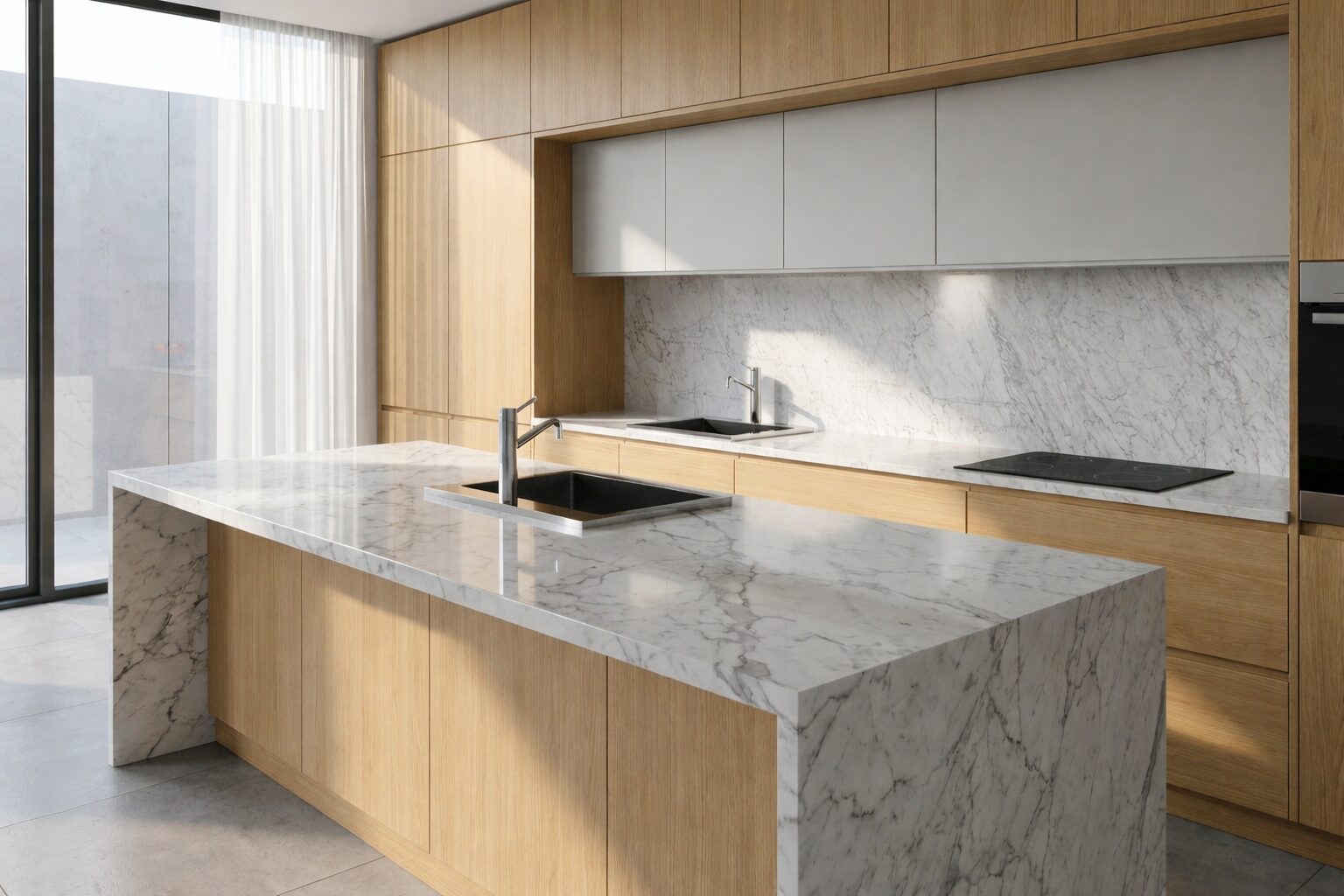
A marble kitchen countertop is one of the most appreciated solutions for those who want a refined space with attention to detail.
Choosing a marble countertop means enhancing the authenticity of the material: each slab features unique veining and shades, making every project one of a kind rather than standardized.
Key advantages include:
- Heat resistance.
Marble tolerates heat fairly well, an important feature near stovetops and hot cookware.
- Long-term stability.
When properly processed and installed, it maintains structural strength and reliability over the years.
- High aesthetic value.
Veining and color variations make every marble countertop a distinctive element capable of defining the style of the entire room.
- Versatility in design combinations.
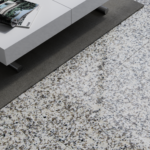
Marble doesn’t have to be limited to the countertop. It can become a recurring element throughout the kitchen, helping to create visual continuity. A table, a custom sink, or even marble flooring can contribute to a cohesive project in which the material integrates seamlessly with the entire space.
What to know before choosing a kitchen countertop in marble
Like any natural material, marble has characteristics that should be carefully considered before making a decision.
Sensitivity to acidic substances.
Marble is mainly composed of calcium carbonate and has natural porosity. For this reason, it can react to prolonged contact with acidic substances such as lemon, vinegar, or wine. This is not a structural issue, but rather a possible surface alteration.
If the surface becomes dull due to these substances, specific solutions are available. Kit MarbleShine – Marble Re-Polishing Treatment is designed to restore the original shine of surfaces, even without professional machinery.
Greater delicacy compared to other materials.
Compared to other surfaces, marble is more sensitive. It can scratch more easily if used as a cutting surface or subjected to repeated friction.
Need for protective treatments.
To maintain its characteristics over time, marble requires specific protective treatments. A stain-resistant protection helps limit liquid absorption and simplifies daily maintenance.
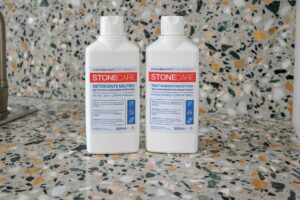
In this regard, StoneCare Kit – Stain Treatment for Marble & Granite offers eco-friendly protection for marble, granite, and ceramic surfaces. The treatment helps block stain absorption, preserve the finish, and facilitate routine maintenance.

Light marble or dark marble: which to choose for kitchen countertop?
The choice of color affects both aesthetics and everyday management.
Light marble
A light marble, such as Carrara White, helps create a brighter and visually more balanced environment. It is often chosen for modern kitchens or smaller spaces because it reflects light and enhances the perception of openness.
From a practical standpoint, it also offers a lesser-known advantage: when it comes into contact with acidic substances such as lemon, wine, or vinegar, the reaction tends to slightly lighten the surface. On a light marble, this variation is generally less noticeable. The same applies to superficial scratches. When marble is scratched, the unpolished area appears lighter than the finished surface, making minor marks less visible on lighter stones.
Dark marble
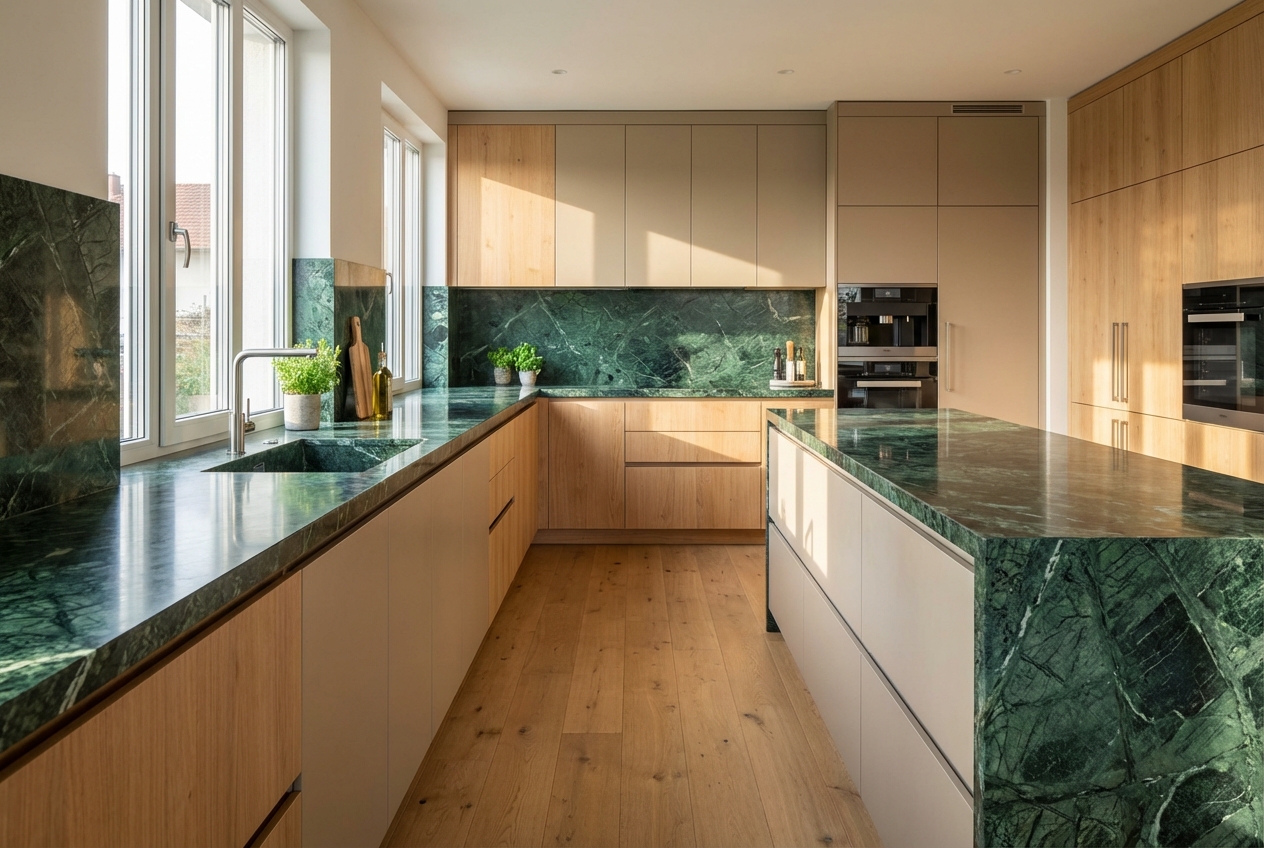
Dark marble adds depth and contrast, making it well suited for contemporary kitchens or projects where a stronger visual impact is desired.
However, darker surfaces tend to highlight certain surface alterations. In the event of contact with acidic substances, the resulting mark is usually more visible compared to light marble. Scratches can also stand out more clearly, as the abraded area appears lighter against the darker background.
Finish: polished or matte?
In addition to color, the finish also impacts the final result.
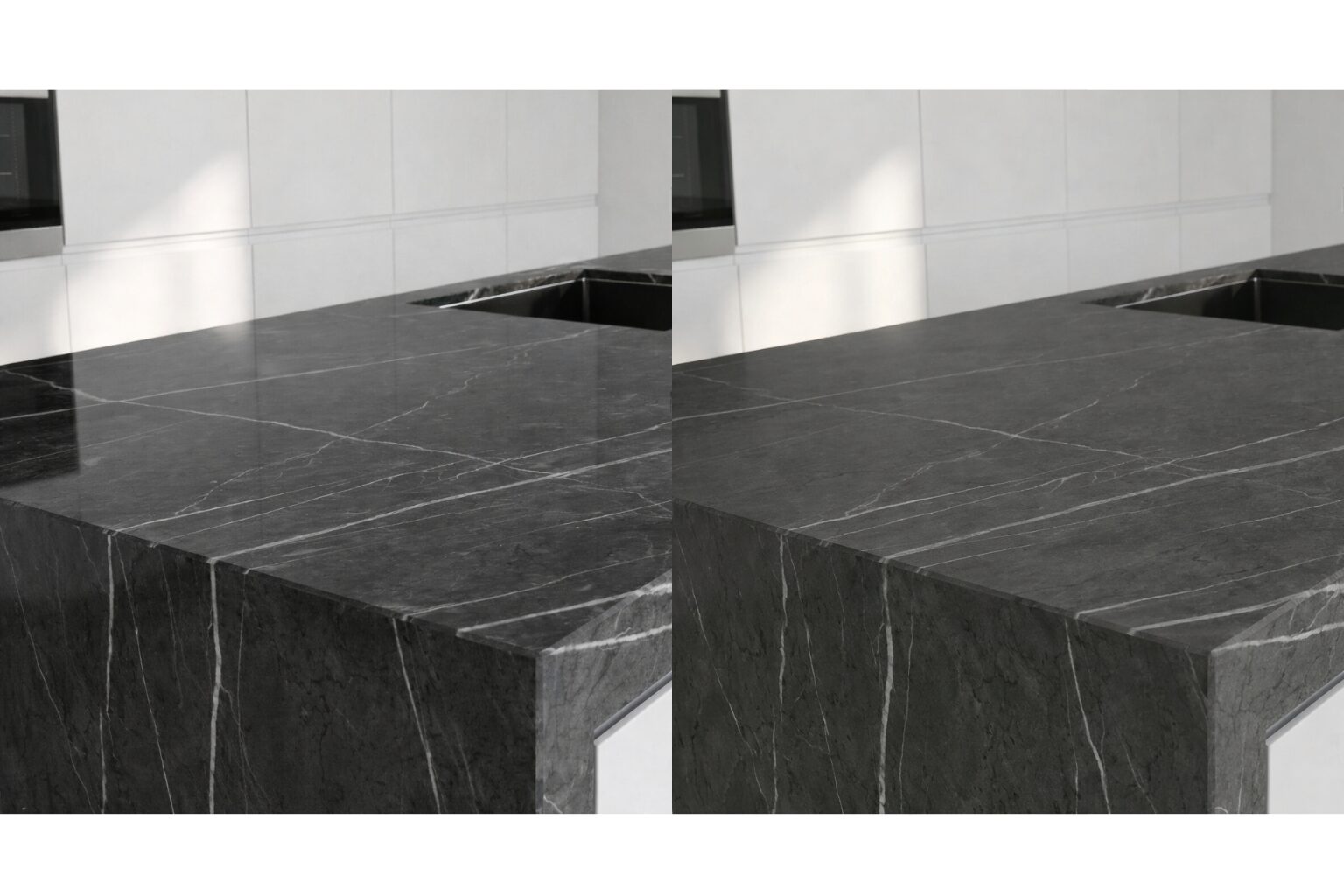
Polished finish
Enhances natural veining and reflects more light. It is often chosen for elegant and bright projects. However, it may make halos or micro-scratches more visible.
Matte or honed finish
Offers a more natural and contemporary look. Light reflection is reduced and the surface appearance tends to remain more uniform over time.
Marble in the kitchen is a choice that requires attention, but it can deliver high-quality results. Understanding both its advantages and its limitations allows for a realistic evaluation and helps avoid impulsive decisions.
If you would like to explore the available options, you can configure your kitchen countertop by selecting features and technical details.
Alternatively, you can request a custom quote to discuss the solutions best suited to your space and needs.